Domaine Lisière The estate
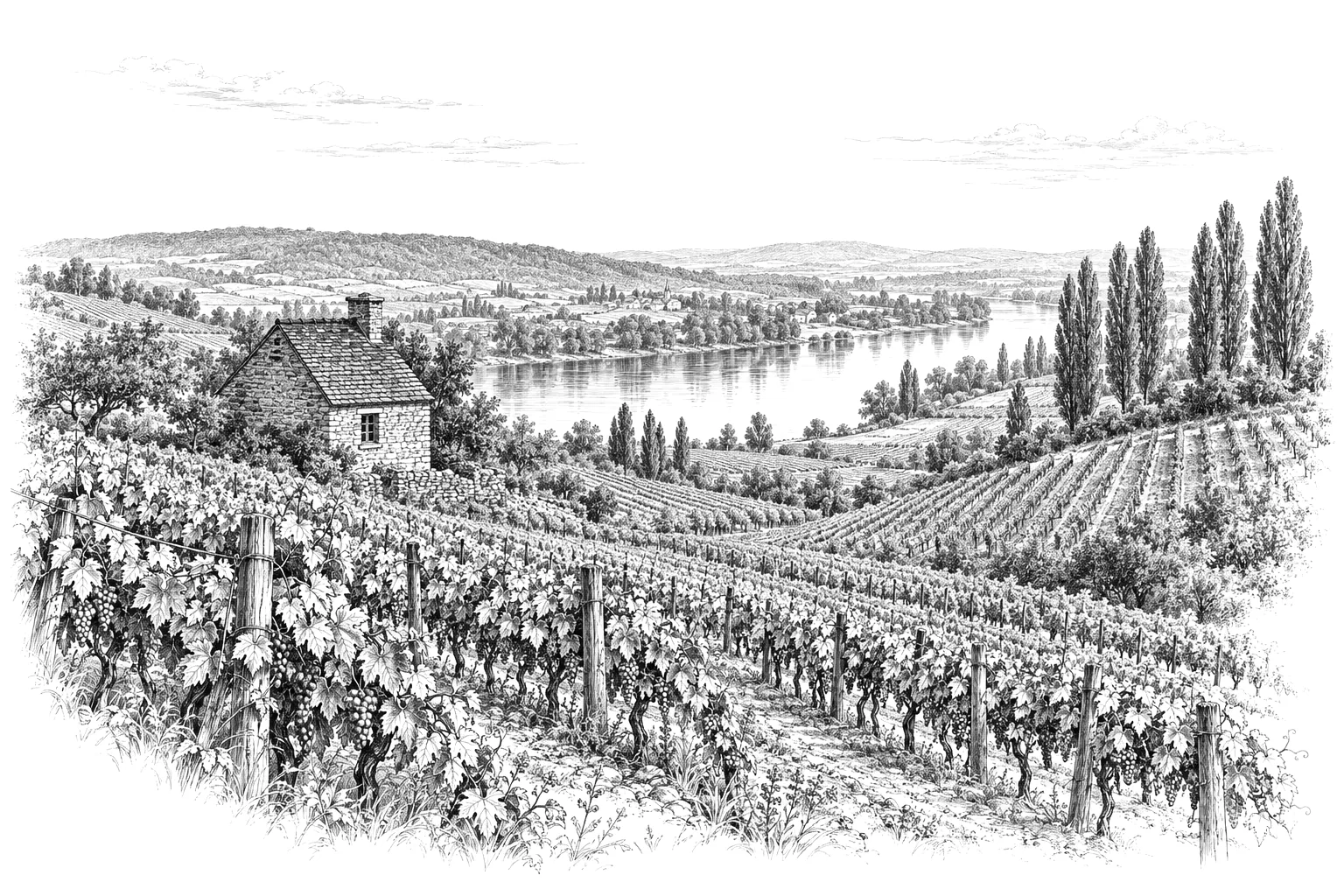
Copper plate etching of Loire vineyard slopes, a line of poplars, and a small stone house.

Domaine Lisière

Three soils. Three wines.

A family estate in the Loire Valley, on one hillside that is three kinds of ground.

Follow the roots down

The estate

Lisière is the French word for the edge of a wood. Our vines stop where the trees begin.

Plate I. The estate from the river road, with the stone house on the lower slope.

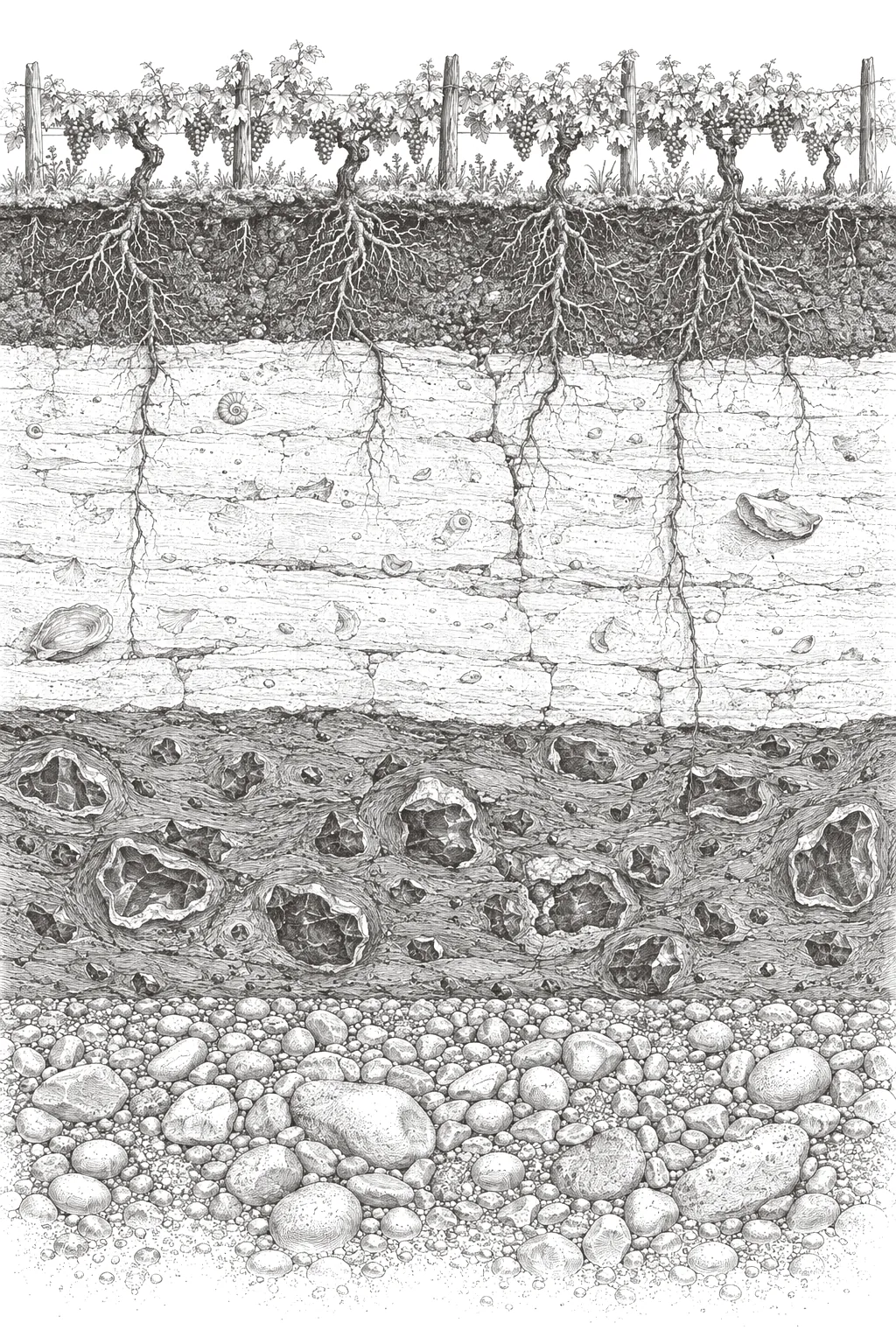
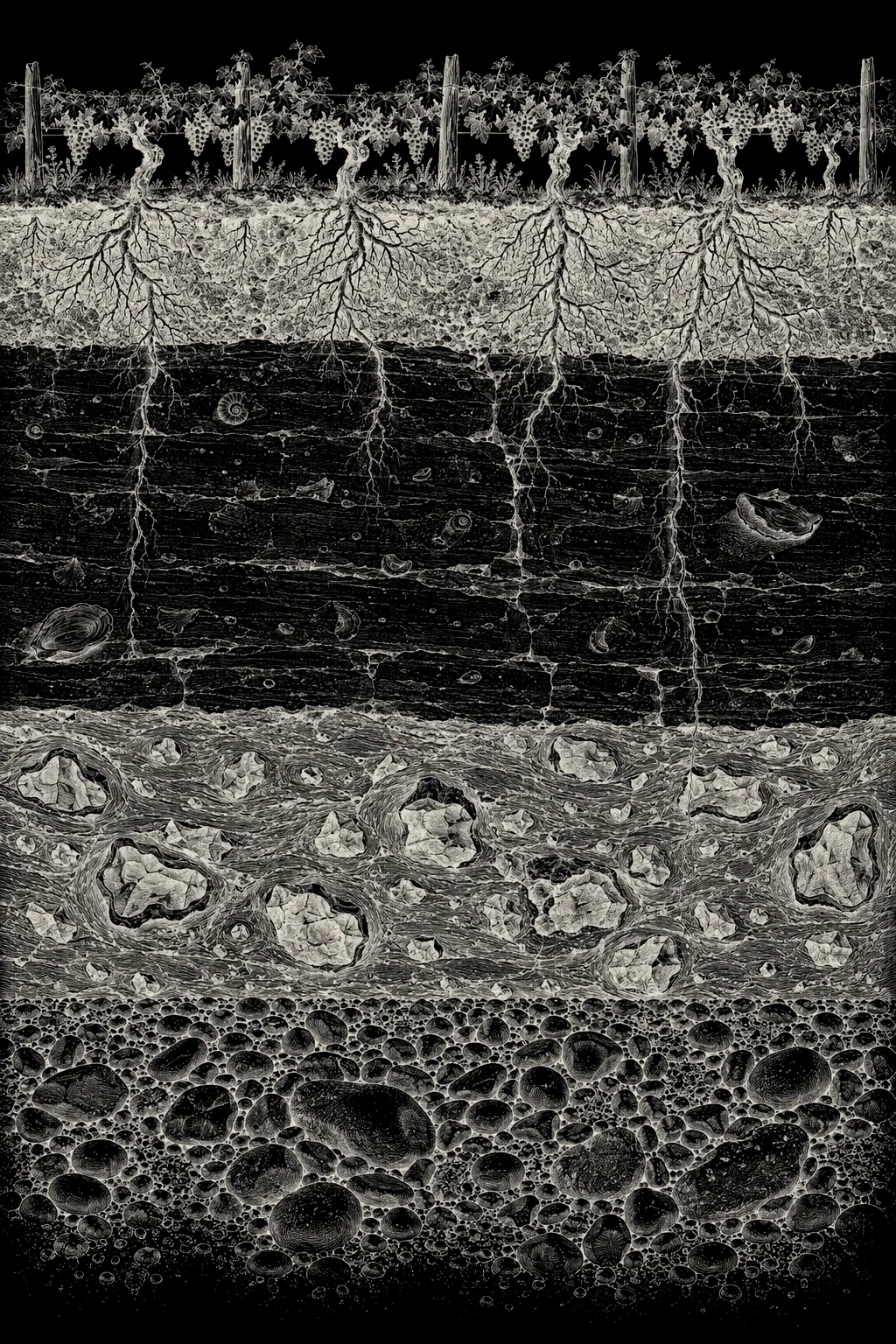
Engraved cross section of the hillside: vines and roots, topsoil, tuffeau limestone, flint in clay, and sand and gravel.
0.0 m

The soils

Where does this taste come from?

From three beds of old ground, tilted under one hillside. Each one reaches the surface in its own plot.

Drag the core down through them, or keep scrolling.

Fig. 1. The hillside in section. Topsoil, 0 to 0.4 m.
Tuffeau limestone

Craie

Chenin Blanc

  • Quince
  • Chalk
  • Honey

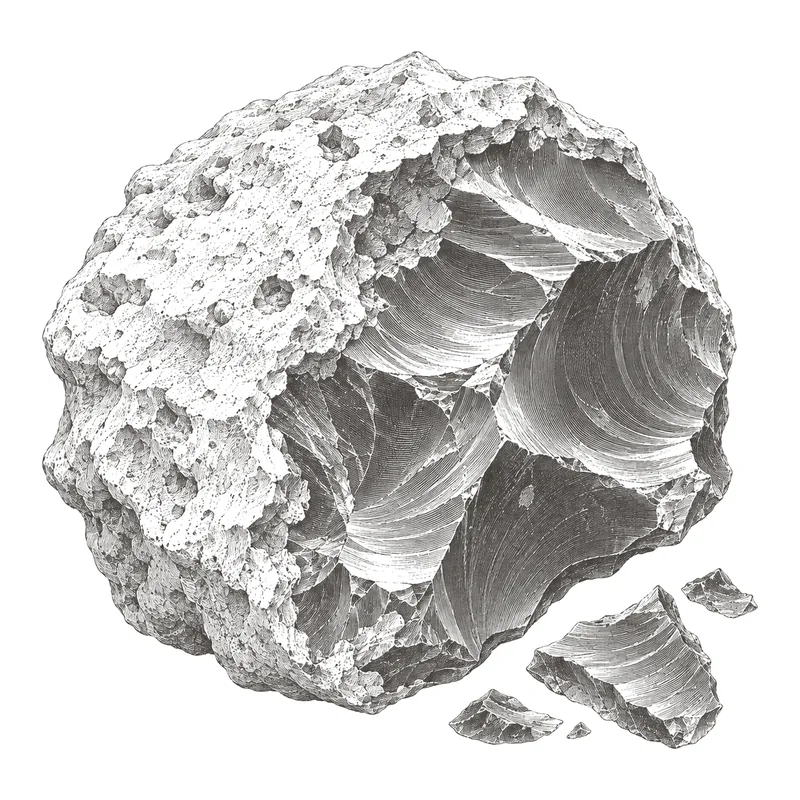
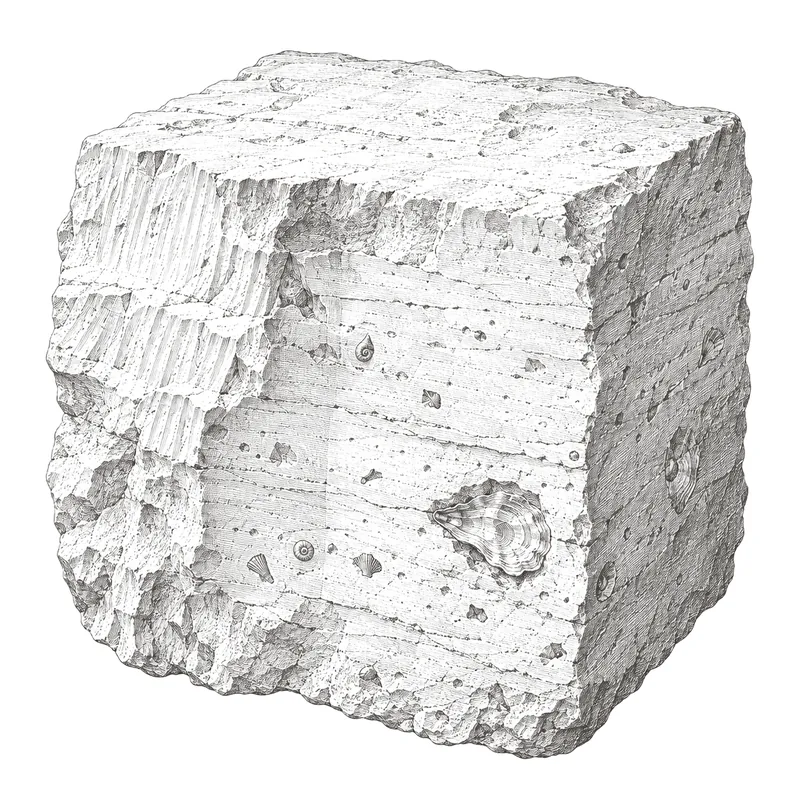
Soft pale stone that holds water like a sponge, so the roots drink slowly here.

Fig. 2. Tuffeau, pale and porous, from 0.4 to 2.1 m.

Engraving of a block of tuffeau limestone.
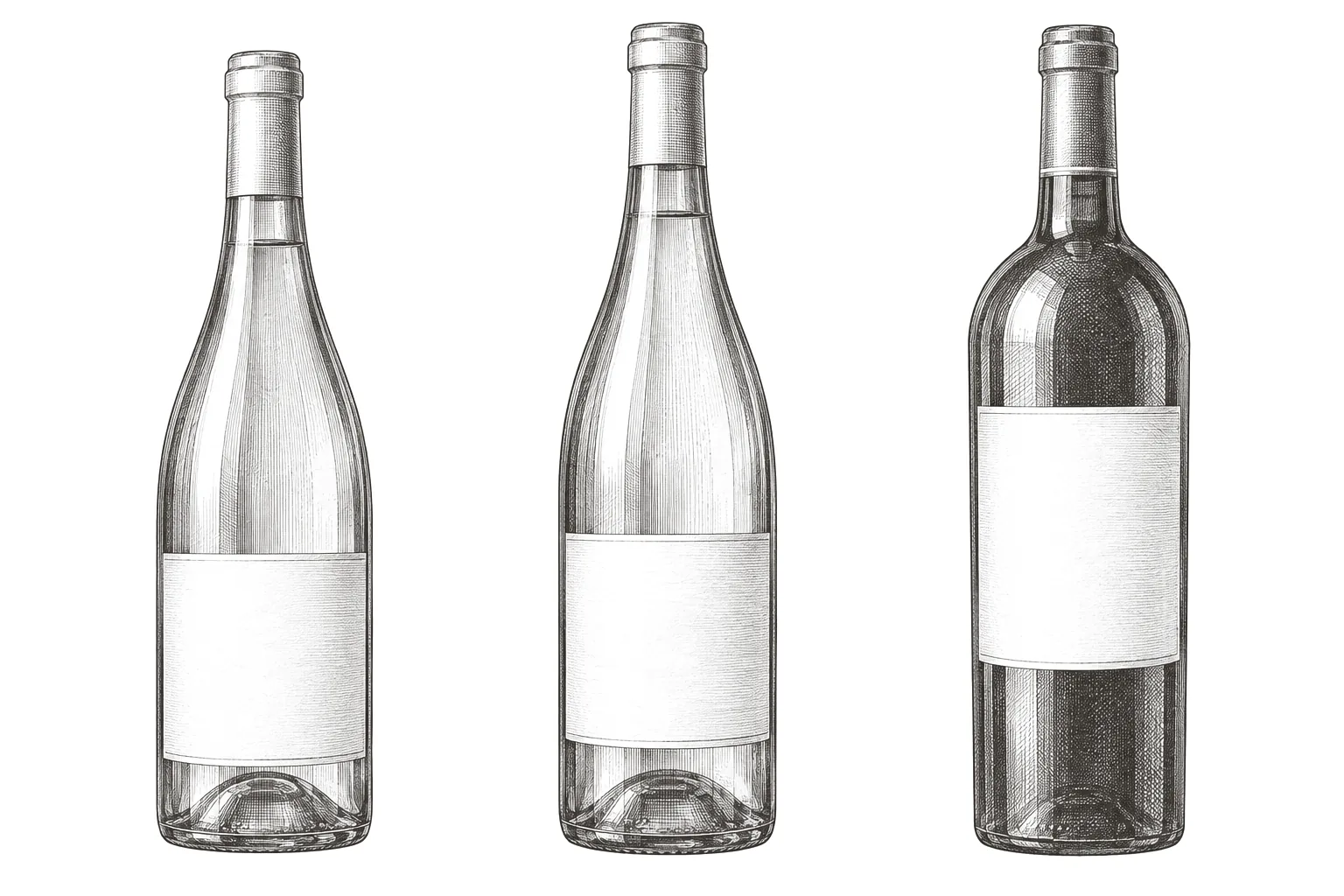
Engraved bottle of Craie, a slim Loire white wine bottle.

Flint in clay

Pierre à Fusil

Sauvignon Blanc

  • Citrus
  • Smoke
  • Stone

Dark stones packed in clay. They keep the heat of the day long after sunset.

Fig. 3. Silex, the old word for flint, from 2.1 to 3.6 m.

Engraving of a flint nodule broken open.
Engraved bottle of Pierre à Fusil, a tall white wine bottle.

Sand and gravel

Gravelle

Cabernet Franc

  • Red cherry
  • Pencil
  • Violet

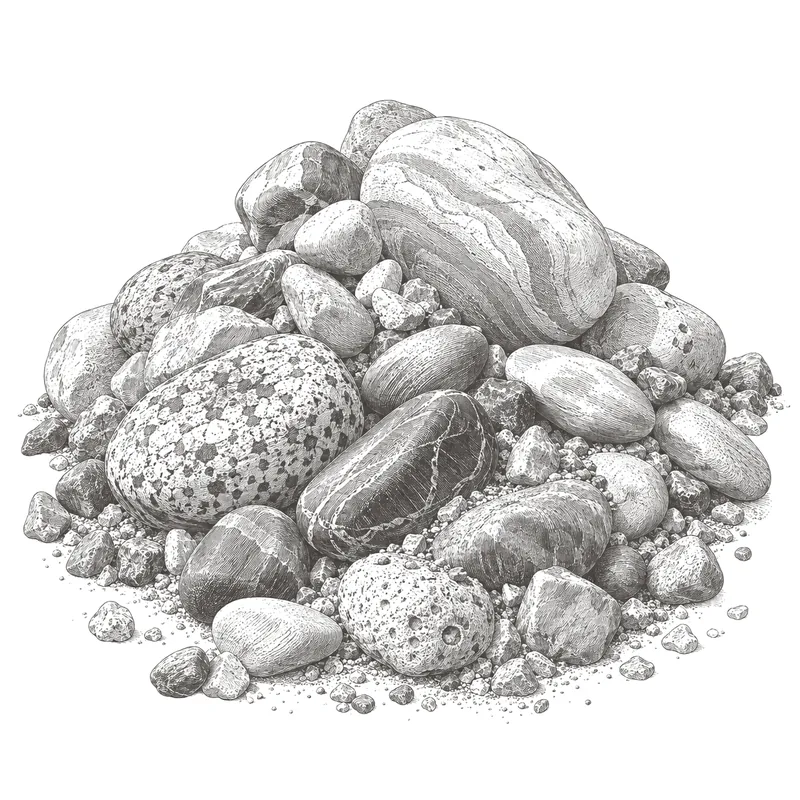
An old river bed the Loire left behind. Water runs straight through it.

Fig. 4. Sand and river gravel, loose and open, from 3.6 to 5.2 m.

Engraving of a heap of rounded river pebbles.
Engraved bottle of Gravelle, a broad shouldered red wine bottle.

For importers

Ask for the tech sheets.

Each sheet sets out the vineyard, the farming and the analysis for one cuvée. Choose yours and your market.

Cuvées
Your market